
How Do We Measure Ed-Tech Success in Device Use?

Questions about the value and impact of classroom technology have resurfaced in districts across the country.
Schools have spent heavily on devices, but why haven't student outcomes followed? It’s led some to question whether devices are part of the problem.
It’s an understandable reaction. Devices are visible, making it an easy scapegoat.
But this may be overlooking the real issue (since devices are already part of most US classrooms) of how access is managed once they’re in students’ hands.
It’s worth examining why.

Why Structure Matters More Than Devices
Research consistently shows that screen time isn’t a single category. The structure of how devices are used matters far more than whether it exists.
Teacher-led device use linked to higher academic performance
In classrooms where technology is guided by teachers, it’s found to support learning outcomes.
When that guidance is missing, student-led device use more often becomes a source of distraction. The difference shows up quickly, in student focus, participation, and the amount of class time spent getting attention back on track.
Devices have become a regular part of classrooms, but the systems that control how they’re used haven’t kept pace.
COVID’s Impact on Device Use
During the early months of COVID, districts acted quickly. Devices were rolled out at scale so learning could continue. That speed was necessary.
But the controls that governed access were often built for an earlier version of the internet and a very different classroom setting.
What followed in many schools was a gap between expectation and reality. Students gained broad access. Visibility into activity was limited. Filtering systems designed around static sites struggled with constantly changing content.
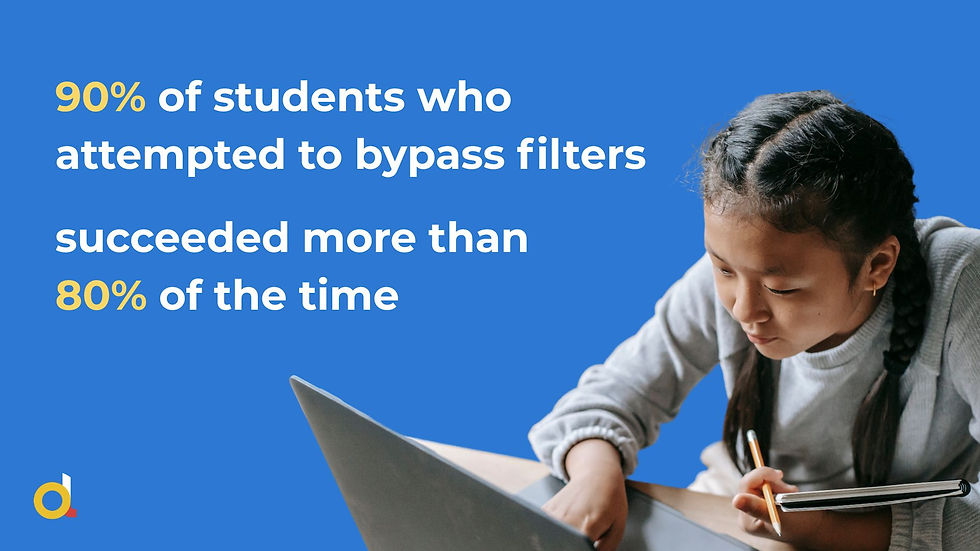
Students learned how to bypass those limits. The tools didn’t adjust at the same pace.
The Real Problems Schools Are Facing Today
Approaches designed for a different era create predictable outcomes
Today, many students are able to work around traditional web filters with minimal effort.
IT teams are aware and trying to combat it. The real problem is that their access controls haven’t kept pace with how the modern internet actually functions.
Techniques such as VPNs, proxy sites, and embedded media are increasingly common in student workflows. Multiple studies and day‑to‑day district experience point to the same pattern: URL‑based controls are easy to bypass.
Category-based blocklists can’t keep up with proxies that change by the minute.
Obsolete Systems Struggle with Digital Classrooms
School leaders should consider if what’s being labeled as a “device problem” is really an infrastructure problem.
Teachers lose class time dealing with distractions.
Filters can block useful material while still missing newly emerging risks.
IT teams are pulled into constant exceptions and explanations.
Parents ask for evidence that schools can’t easily provide.
Instead of supporting instruction, these gaps add friction for teachers, IT teams, and families.

Devices Are Now the Standard for Modern Learning Environments
For those districts that have devices in the classroom, how student device access is managed on a day-to-day, such as when the computers or tablets are open, closed, or used for specific tasks, really matters.
This is especially challenging as classrooms shift between research, collaboration, and media use within a single lesson. Which often leads teachers and IT teams to make real‑time judgment calls, whether to allow content, pause instruction, or redirect device use mid‑lesson, while students adapt to the access that’s available.
Modern access management approaches can reduce this daily decision‑making burden, such as web filters that forgo blocklists and block distractions in real time, or classroom solutions that prioritize human interaction while still allowing for device use.
A More Practical Way Forward
Improving how devices are managed doesn’t mean eliminating flexibility or trying to anticipate every possible scenario. No access control system can do that, especially in classrooms where lessons, student needs, and instructional methods shift throughout the day.
But when expectations are clearer and access patterns are more predictable, there are fewer surprises. Teachers spend less time redirecting behavior, students are less likely to experiment with workarounds, and IT teams are pulled in less often after issues have already disrupted instruction.
A more practical way forward is to create the conditions where device use supports learning consistently, instead of competing with it.


